

How Long Do Candles Take To Set
How to Make Soy Wax Candles
London with Particle Appurtenances started making candles in 2022. She loves olfactory property's link to memories and emotions. Learn more almost how she got started in this interview. Over the next month, London will exist sharing her creative energy and soy wax expertise with you lot! She designed several candle projects for Bramble Drupe and she'll be featured in upcoming videos. She'southward likewise collaborating with our creative team to bring you even more projects in the future.
In this article, London breaks down how to make soy wax candles from offset to end. Learn more about choosing a wick, calculation fragrance, what temperatures work all-time, and what tools you demand. With her tips, you'll be an skilful in no fourth dimension!
Find everything you need to make soy wax candles here.
Why soy wax?
Soy would be considered a vegan wax, where it does not derive from a living insect or animal. It's fabricated from renewable soybeans, and U.s.a.-grown soy has a strong sustainable footprint. Soy produces 90% less soot than alkane series wax, and does not emit chemicals similar toluene, benzene, methyl ethyl ketone, or naphthalene. It burns clean, doesn't have an smell on its own like beeswax, and won't get out blackness soot on the walls or upholstery. Soy wax is less costly than beeswax to produce and is water soluble, which makes cleanup a breeze.
Soy is an affordable and beginner-friendly wax. With natural ingredients/products in loftier need, soy is familiar to the market and well sought out. While fragrance tends to be more subtle in a soy candle, information technology still holds scent well and produces less soot than other wax types. Features to look for in soy wax would be a high fragrance load capability (10%+), proficient glass adhesion, and a strong cold and hot throw. If you're worried about ecology impact, look for US grown non-GMO.
Choosing your candle container
Soy burns hot, so your container needs to withstand high temperatures. Glass, ceramic, and metal are all suitable for candle making. Drinking glass with a heavier bottom and fifty-fifty walls will hold in heat and probable requite you better adhesion considering information technology will absurd evenly. Plastic is not recommended, every bit it can melt and release chemicals into the air, or crusade a fire. Woods and raw dirt containers such equally terra cotta are too porous and would non be suitable for candles.
Choosing your candle wick
Wood wicks, cotton core wicks, and paper core wicks all work well for soy container candles. Use the manufacturer'southward suggestions for the size, and then test information technology to make sure it burns well.
Make sure your wick has a tab at the bottom, or a clip if using woods wicks, that tin exist adhered to the bottom of your container. For wood wicks, this is all y'all'll need; the wick prune holds information technology upright and centered. For cotton wool and paper wicks, a bow tie wick centering device is my favorite because information technology fits several containers and can as well be used with a double wick. A clothespin can work besides!
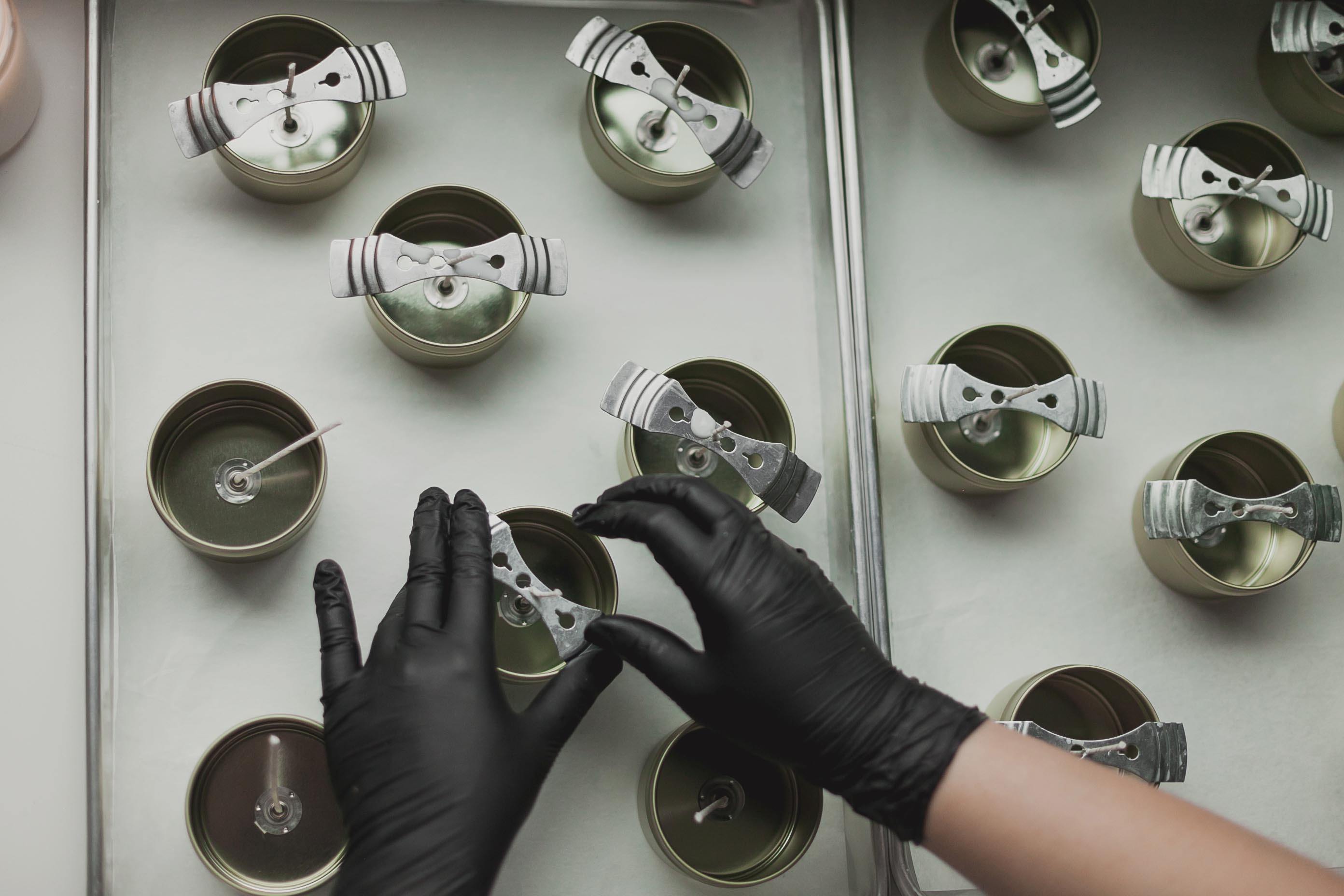
Melting soy wax
I recommend either a double boiler or a wax melter. Melters can overheat your wax, so it needs to be able to regulate the temperature and have an machine shut-off rubber feature. Do non heat the wax directly in a pan and exercise non exceed 200° F for soy, or it will yellow.
Other great household tools are:
- A good kitchen scale to ensure y'all're getting the proper measurements
- Forest or silicone spoon/spatula for stirring
- Parchment paper to protect your piece of work surface
- A digital thermometer
- A spray canteen of isopropyl alcohol and paper towels for cleanup
I always keep some gloves handy likewise.
To brainstorm, place the parchement paper on your work surface. Turn on your wax melter or place a large pot on the stove and make full information technology halfway with water. Then, place a pot on top to make a double boiler, turn the heat to medium, and go along an centre on it. Slowly add together your soy wax. Now merely let it melt! That tin can accept anywhere from 10-30 minutes, depending on the size of your batch.
Adding fragrance to candles
How much you add varies based on preference and density of the oil. Some oils (like those containing vanilla) can be stronger than others. It'south a good rule of thumb to start effectually 6%, or ane oz. of fragrance per 16 oz./ane lb. of wax. Most wax manufacturers take a recommended fragrance load of vi-8% with a max of 10-12%.
Citrus and some herbal oils, particularly those primarily fabricated of essential oils, take a lighter density and therefore may burn off also speedily or the fragrance itself may odor "off." Try adding these oils at a lower temperature and/or blending with a college-density oil. Most fragrances with vanillin/vanilla will be easier to work with due to their high density. Brand certain you lot're using oils made for candle making and not perfume or cologne, which contain flammable ingredients like alcohol and dipropylene glycol.
Every bit for what temperature to add fragrance, refer to the manufacturer'due south recommendation. Y'all want to bring the wax to a higher temperature than only the melt betoken to ensure the wax molecules have fully expanded. That way each fragrance molecule will be fully encapsulated and trapped within the wax. Nigh fragrances should be added betwixt 175-185° F. Make certain your wax has been removed from the rut source before calculation fragrance oils.
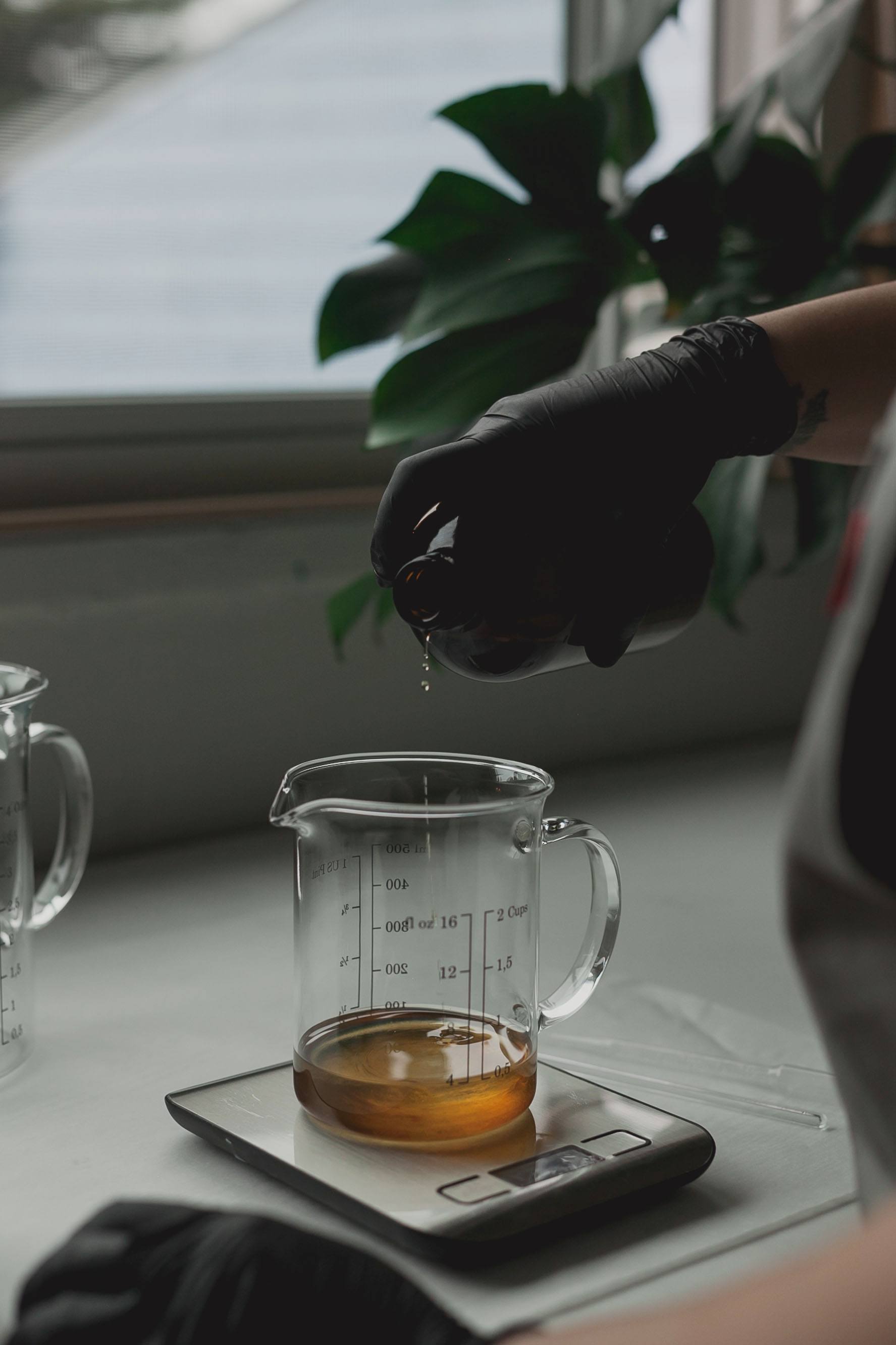
Adding actress oils and butters to candles
Massage candles accept grown in popularity, and would be a expert project to incorporate extra butters and oils. For traditional candle projects, you should not be calculation extra oils and butters considering it volition crusade the wax to soften and affect the burn quality and fragrance throw. Some candlemakers tout the benefit of a petty fractionated coconut oil in their soy wax to reduce frosting and increment glass adhesion, but remember that you'll have to account for that oil in your fragrance per centum besides. Your wax is like a sponge - it can just encapsulate so much oil, so adding kokosnoot oil may reduce your fragrance load.
Pouring the candles
The pouring temperature depends on the wax. Each blend/brand of soy wax may have its own properties and additives that affect the pouring temperature. The industry standard is to pour effectually 135° F, or just as the wax starts to look slightly opaque, but some wax can exist poured equally high as 160-175° F. Pouring temperatures as well depend on the overall temperature of your workspace where your candles volition cool, and on a cold 24-hour interval you may demand to increase your pouring temp.
Candle cleanup
Most pouring pitchers on the market are made of aluminum, so they tin't be run through the dishwasher. Nearly equipment and surfaces can be easily cleaned with hot soapy water or isopropyl alcohol.
Curing candles
This is oftentimes a debate among makers. Soy wax encapsulates/traps fragrance oil molecules during the bonding process. Soy does not readily release or evaporate fragrance like alkane series wax and takes longer to bind together. Allowing your candle to cure (rest) for several days before burning for the first fourth dimension will allow the soy wax and fragrance molecules to fully demark together. Cure times are recommended at a minimum of 3-4 days and a maximum of 2 weeks. Performing your own tests will help you determine how much fourth dimension is needed to get the optimal hot throw.
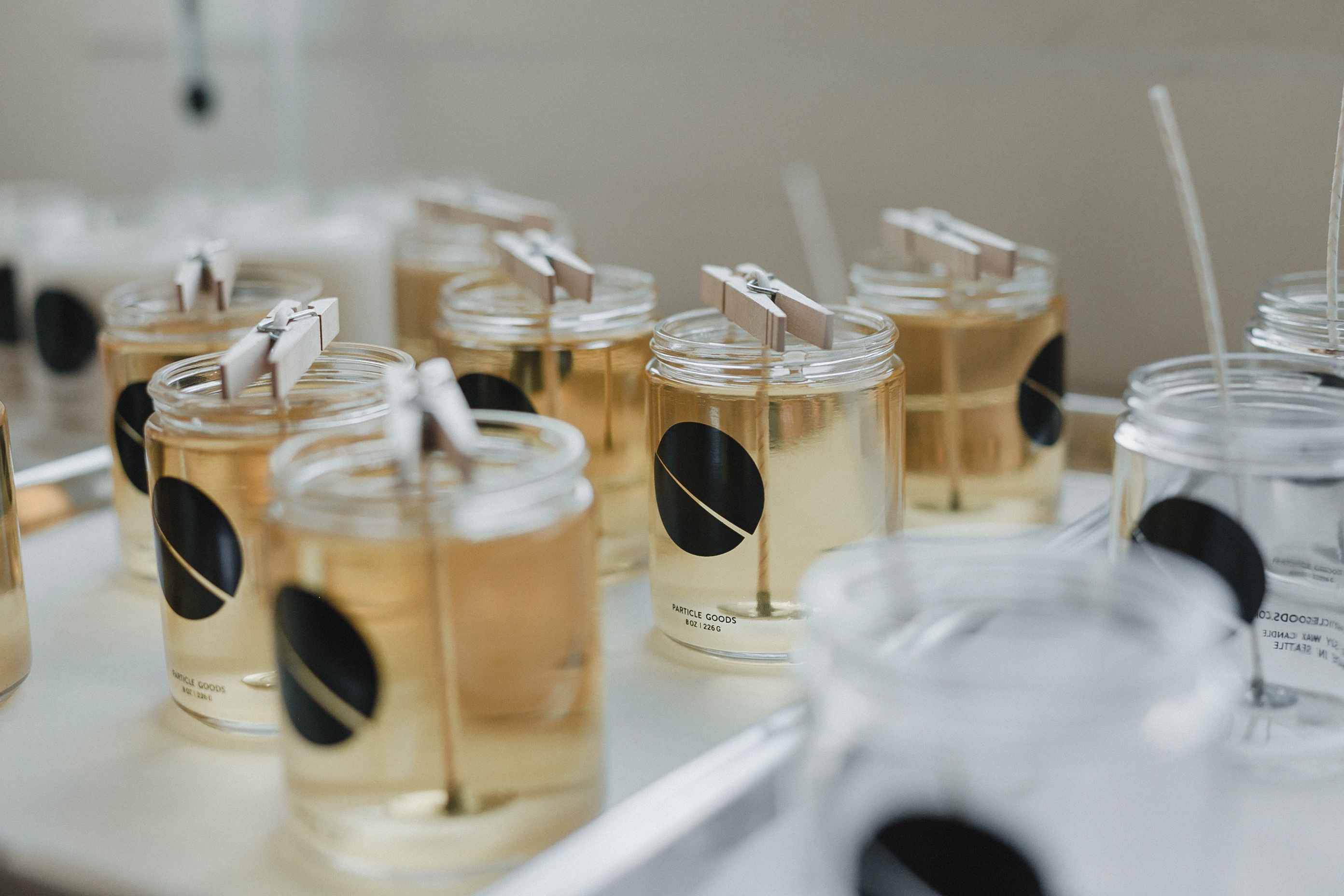
Troubleshooting mutual candle issues
Frosting: Soy and other vegetable waxes are natural and therefore prone to frosting. This looks like minor snowflakes or crystallizing on the surface of the wax. This is 100% artful and does not bear on the candle. If your candle has frosted, in that location is no way to fix it afterward the fact.
- Try pouring at a higher temperature or lower temperature until you notice a reduction.
- Endeavor stirring less and do not stir before pouring, only when adding fragrance oil.
- Some fragrance oils, and especially essential oils, are more than decumbent to frosting if not poured at exactly the right temperature.
Delamination/wet spots: Sometimes the wax may pull away from the glass in certain spots. This is common and acquired by many factors, including pour temp, ambience room temp, and cooling room temp.
- Brand sure you're using a wax blend specifically for container candles.
- Effort pouring at a hotter temperature. Start at +5 degrees at a time until it's resolved.
- Before pouring, try preheating your glassware on the lowest oven setting until only warm to the touch simply not hot.
- Make sure the room you're working in stays at 70 ° F during pouring and cooling. Yous'll well-nigh likely come across moisture spots occur overnight when the temperature drops.
Uneven tops or cratering: Sometimes the tiptop of your candle looks bumpy or has sinkholes after cooling. This could be the pouring temp or the room temp.
- Make sure not to move your candle around after pouring. Set it in a spot to cool and get out there until fully cured.
- Try pouring at a hotter temperature.
- Endeavor leaving ane/four" room at the top, and then meridian off with a 2d pour of wax afterwards the candle has cooled.
- Attempt reheating the top with a oestrus gun. DO Not USE A BLOW-DRYER. Heat guns are condensed heat with little airflow, while a accident-dryer will non reach a high plenty temp and will make a huge mess.
Sweating: If yous see small beads of oil on the surface of your candle after cooling, this is what's known as sweating. This is acquired past either:
- Adding too much fragrance. The wax is like a sponge and tin can simply hold and then much fragrance oil. The excess volition leach out.
- Not incorporating your oil well. Endeavor adding the fragrance at a higher temperature like 180-185 ° F and stir gently just continuously for 1-ii minutes.
Wax discoloration: Candles may discolor for several reasons, before or after burning.
- Fragrance oils with vanillin content will by and large discolor immediately, merely definitely if exposed to UV light over time. Try adding a UV inhibitor to the wax when pouring to reduce this.
- Wax was heated above 200 ° F for a prolonged period of time.
- Essential oils can oftentimes discolor the wax and volition go along to darken with time/UV exposure.
- Wax may discolor slightly after burning, and y'all'll find that it appears darker subsequently it's cooled again. This is natural with many fragrances.
- Age. Candles can fade or discolor over fourth dimension. By and large, candles will get-go to change after 9-12 months, and sooner if exposed to UV light.
No hot throw: This can be caused by numerous things, and information technology's of course very frustrating. Here'south where I would first troubleshooting:
- Ensure you're assuasive the candle to reach a full melt puddle. The throw comes from the melt puddle, so in club to make full the room with fragrance, information technology tin take two-3 hours of burn down fourth dimension.
- Wick size is often the culprit here. Make sure you're using the correct size wick. Pay attending to flashpoints in your fragrance. The higher the flashpoint the denser the oil, the lower the flashpoint the lighter it is. Higher-density oils need more heat (larger wick) to create the combustion needed to melt the wax and release the fragrance. Lower-density oils need less and therefore a smaller wick.
- Too much fragrance oil
- Too little fragrance oil
- The wax blend. Because soy has a college melting signal, information technology takes a lot of heat and energy to burn. This ways that soy does not release fragrance every bit readily as some other types of wax. Try a different wax blend.
Scent smells weird/bad: Some oils merely aren't uniform with candle making. Brand certain to use high-quality oils specifically made for candles.
- Some oils, similar herbals and citrus, are known to exist fragile and have a lower density. Mixing them with a higher-density oil like vanilla, for case, tin can sometimes fix this.
- Endeavor using a smaller wick size.
- All fragrances and essential oils have a shelf life. Aroma molecules can oxidize over time and pause down. Fragrance and essential oils mostly accept a shelf life of 6-12 months. Be sure to store them in opaque or dark glass bottles, and practice not store in metal or plastic containers.
Wax balance on the container after burning: Some residue on the walls of the container is normal. Most probable this will lessen equally the candle continues to burn down. If in that location is a meaning corporeality of wax nevertheless subsequently a 4 hour burn, you may need to wick up a size.
Flame is high and wick is putting off smoke or mushrooming during burn: This could exist due to several issues:
- Wick not being trimmed before each new burn. Wicks should ever exist trimmed to ¼" before each burn.
- Wick size is besides large and there is carbon build up
- Candle is in a room with a draft or likewise much wet (like a steamy bathroom)
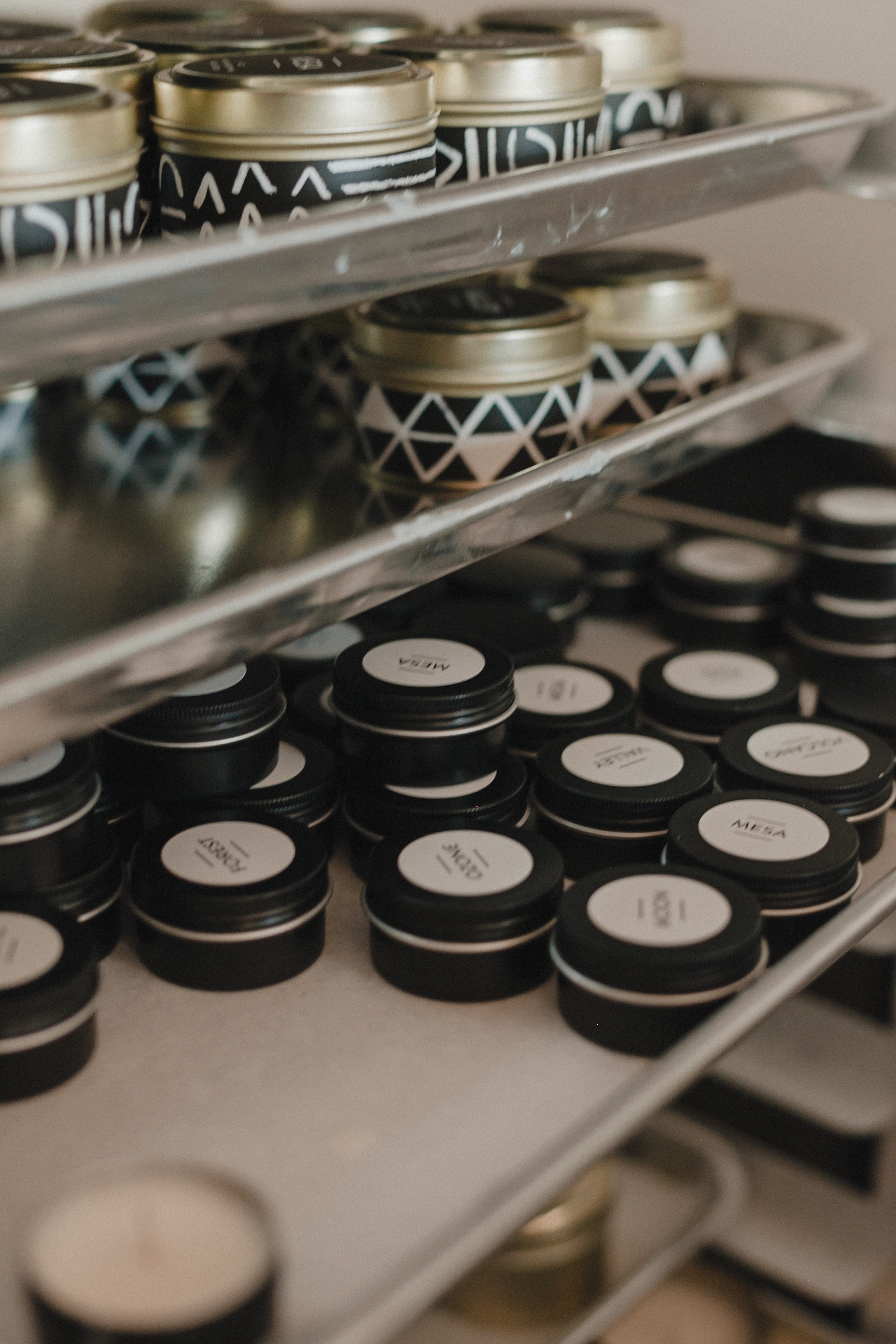
Glossary
- Burn time: The amount of time it takes for the wax in a candle to be consumed completely
- Cold throw: The force of fragrance emitted from the unlit candle
- Double boiler: Two nested pans with water in the lower one, designed to allow slow, even heating
- Essential oil: Distilled oil from plant affair, 100% natural oil
- Flashpoint: The temperature at which a substance can ignite if it comes in contact with an open flame or spark
- Fragrance oil: Full-bodied scent oil made of either natural or synthetic ingredients, or both
- Fragrance load: Maximum amount of fragrance the wax can hold
- Frosting: White crystals that resemble snowflakes on the surface of the wax
- Hot throw: The strength of fragrance emitted from candle while burning
- Melt indicate: The temperature at which wax will starting time to liquefy
- Melt pool: The liquified wax pool as the candle is burning
- Mushrooming: Carbon build upwards on the tip of the wick while or afterwards burning
- Sinkhole/crater: Cavity that forms when the wax hardens and contracts
- Tunneling: When a wick does not make a total melt pool in a candle and leaves a ring of unmelted wax on the sides
- Moisture spots: An area where the wax has pulled away from the container, leaving spots or large areas that accept shrunk away. Usually a problem with container candles in clear glass. Also referred to as delamination.
- Wick: Textile that delivers fuel to the flame in a candle
- Wick tab: Flat metal disc that holds the wick at the lesser of a candle
- Wick clip: Used to keep the wick upright and centered while cooling
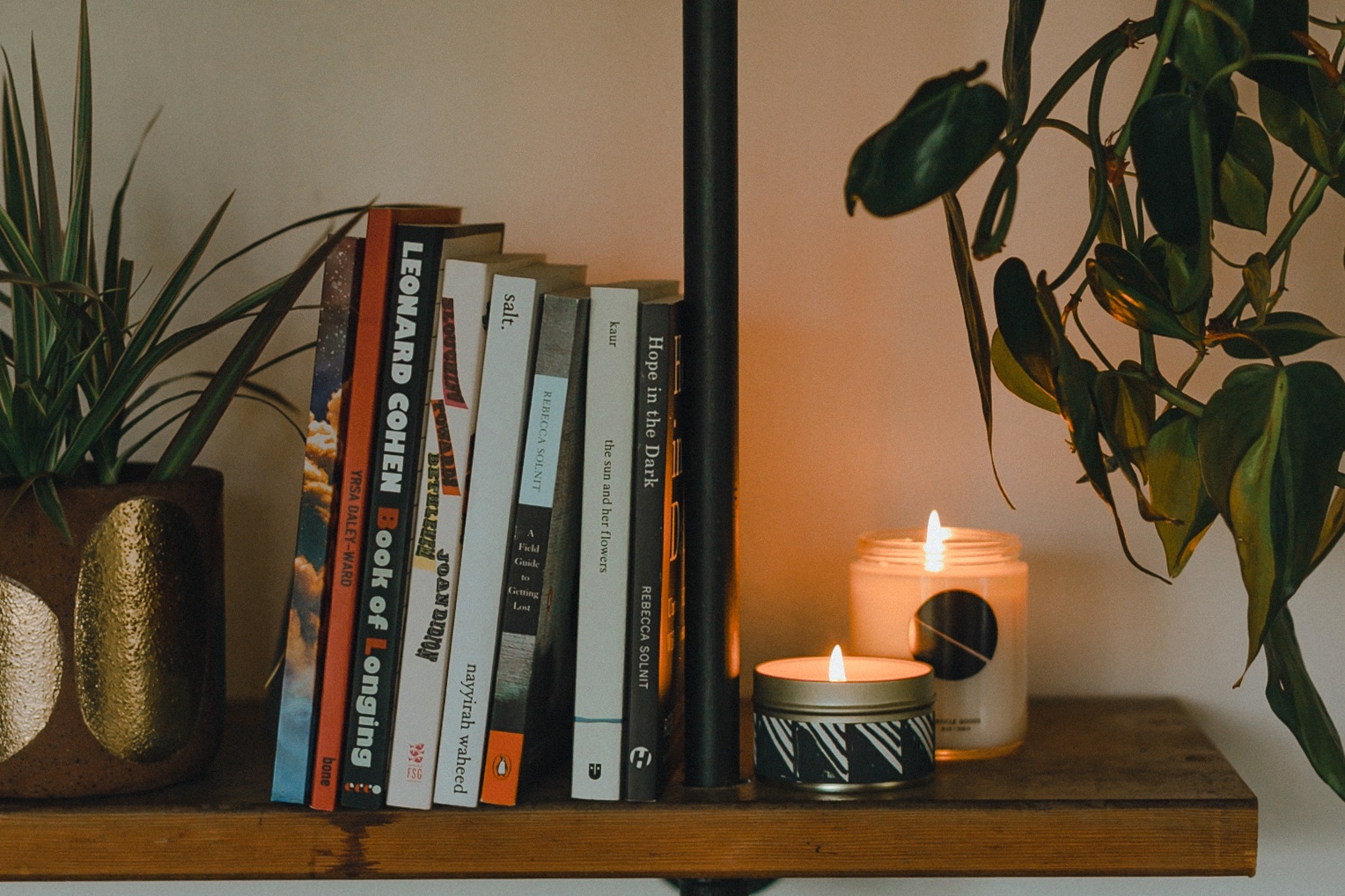
Photos courtesy of Particle Appurtenances.
Ready to get started? Find soy wax candle making recipes here and soy wax candle making kits here.
Source: https://www.brambleberry.com/how-to/candles/art0126-soy-wax-101.html
0 Response to "How Long Do Candles Take To Set"
Post a Comment